

Article: Why Cernir Hand-Stitches Every Watch Strap?
Why Cernir Hand-Stitches Every Watch Strap?
A leather watch strap may first be judged by how it looks. But for long-term use, the technical details inside are even more important. One of the most important parts of the strap’s structure is the stitching.
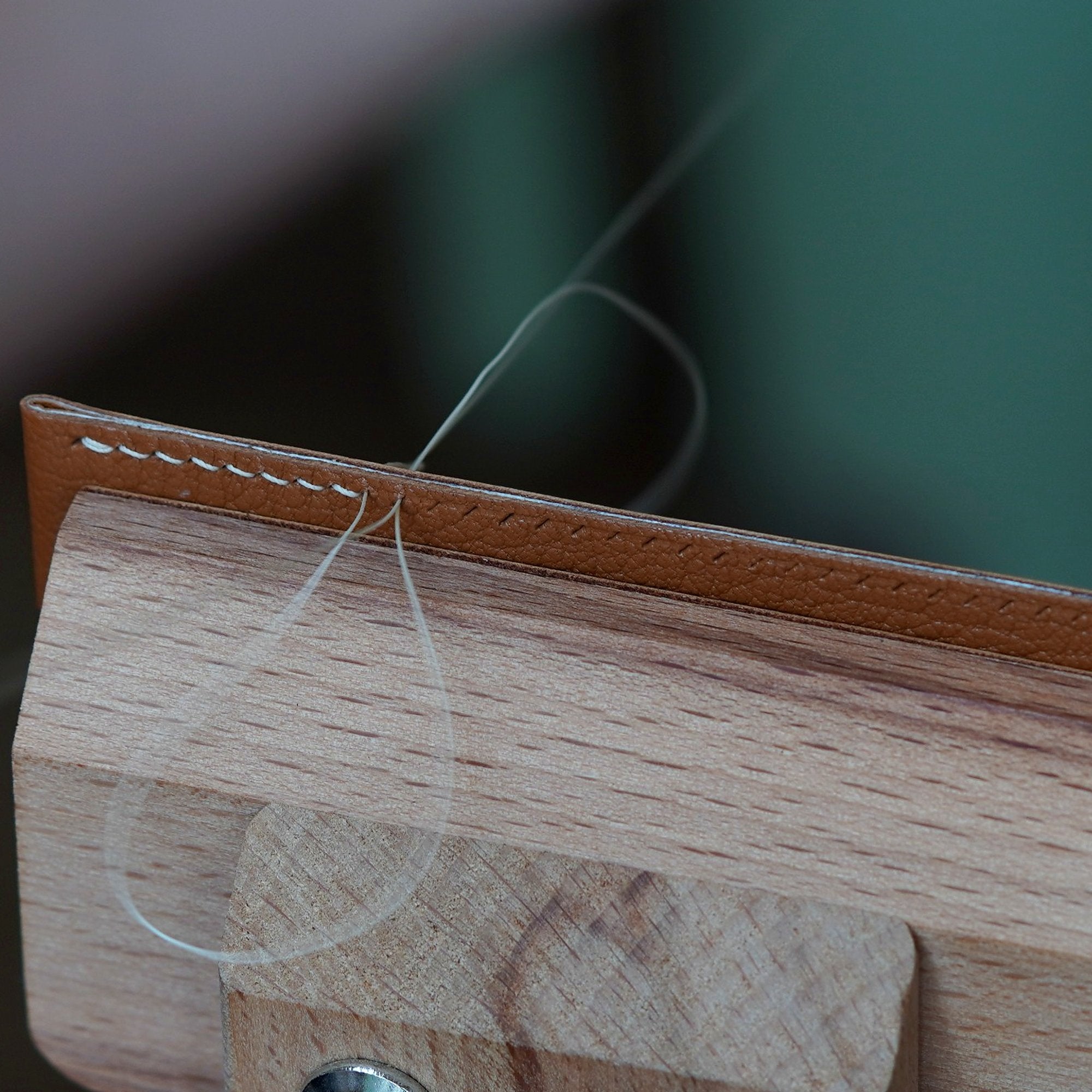
At Cernir, stitching is not just for decoration. It keeps the leather layers stable, carries pressure when the strap wraps around the wrist, and directly affects the durability of the product. That is why every strap is hand-stitched using the traditional saddle stitch technique. This method is slower, but it allows the craftsman to control every stitch, every pull of the thread, and every small detail on the strap.
For us, craftsmanship is not just a word for branding. If you have the chance to visit the Cernir workshop, you can see how a strap is cut, shaped, hand-stitched, edge-finished, inspected, and packed before it reaches the customer.
1. Hand stitching creates a stronger structure
Hand stitching with the saddle stitch technique uses two needles that pass through the same hole from opposite sides. Each stitch is tightened and locked independently, creating a stronger and more stable line of stitching during use.
For a watch strap, the stitching has to handle bending, pulling, and daily friction. If one part of the thread becomes worn or damaged after long-term use, the surrounding hand stitches can still help hold the structure together. In comparison, machine stitching can unravel more easily in a chain when one part of the thread breaks.
This is why Cernir chooses hand stitching for every strap. It is not because hand stitching is slower or more complicated. It is because it creates a more reliable structure for a product used every day.
2. Hand stitching helps control the tension of each stitch and protects the leather surface
Real leather, especially premium leathers such as Alligator, Epsom, Togo, and Alran Chevre Sully, needs to be handled carefully in every step. When stitched by machine, the needle moves at high speed, and the thread tension follows the machine mechanism. This can create strong pressure on the leather surface.
With hand stitching, the craftsman controls every needle movement and every pull of the thread. The stitching tension is adjusted based on the thickness, softness, and character of each type of leather. This helps prevent the thread from being pulled too tightly, leaving marks on the surface, pulling the grain out of line, or affecting the natural structure of the leather.
This method is slower, but it helps Cernir better preserve the beauty and original character of the material.
3. Hand stitching has better aesthetics than machine stitching
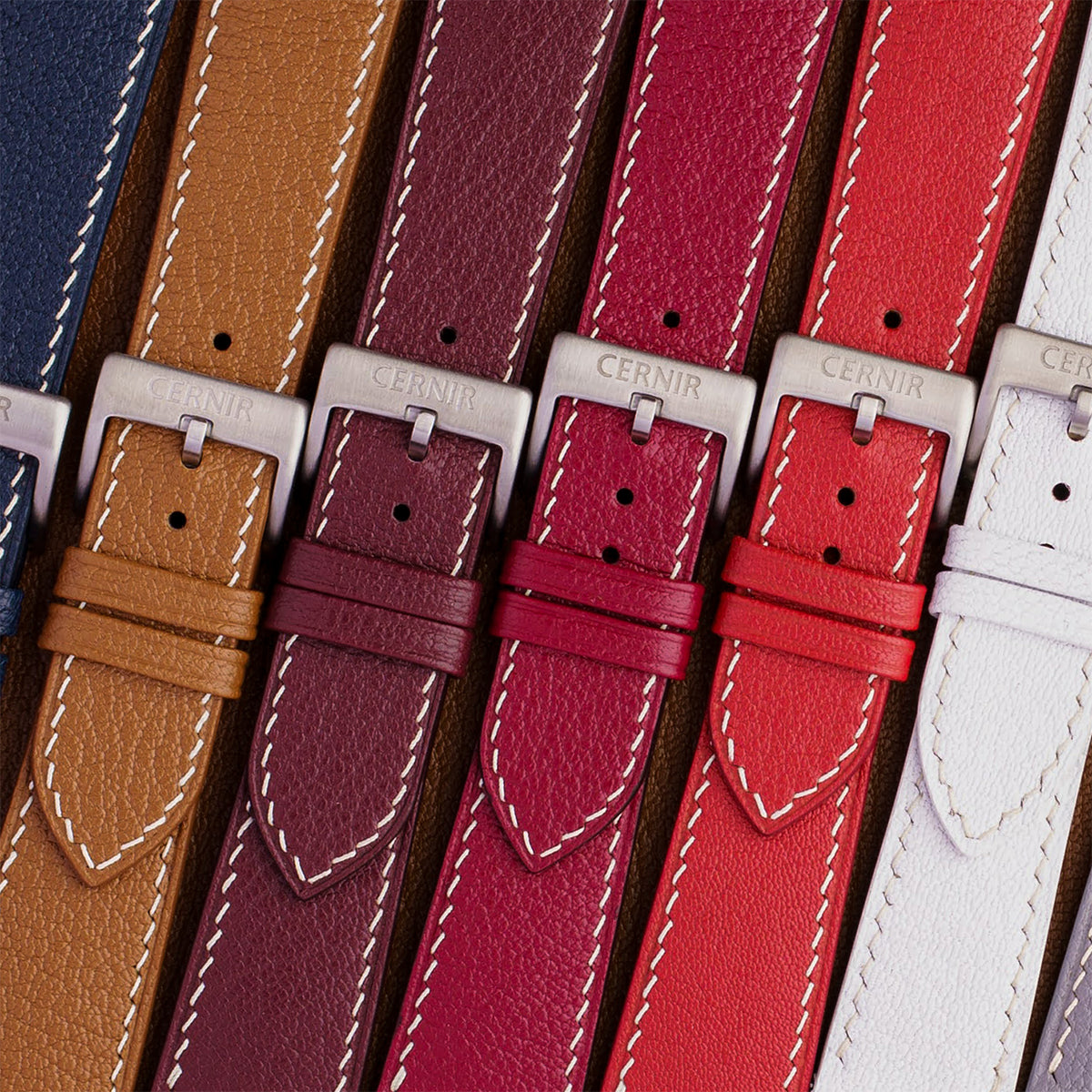
A beautiful hand-stitched line has a slight angle, an even rhythm, and a sense of depth. It not only makes the strap stronger but also gives it the refined look of a handmade product.
Machine stitching often creates an even line in an industrial way, but it can look flat and lack depth. In comparison, a handmade saddle stitch feels more alive because each stitch is directly controlled by the craftsman.
At Cernir, we want the stitching to be technically correct and beautiful when viewed up close. You can see this in our product photos. Every product is photographed with clear macro shots that show each stitch in detail.

4. Cernir is committed to quality by investing time in every process
Machine stitching can finish a line of stitches in only 1 to 2 minutes. But with hand stitching, the craftsman may spend hours working through each stitch, pulling the thread by hand, and checking the stitching throughout the process.
Cernir chooses the slower method not to make things more complicated, but because we believe quality needs time. When a strap is carefully hand-stitched, the craftsman has enough time to look, feel, and adjust every small detail. That is something a sewing machine is very hard to replace.

Leave a comment
This site is protected by hCaptcha and the hCaptcha Privacy Policy and Terms of Service apply.